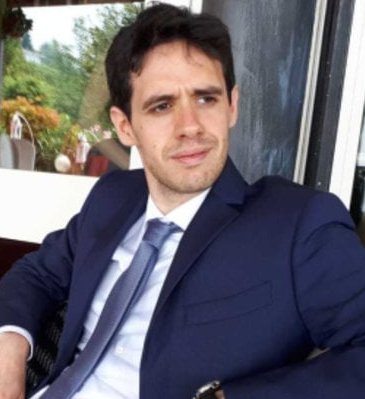
Prof. Giorgio Besagni, PhD
Principal Investigator
Leads the AURIGA project at the Department of Energy, Politecnico di Milano. His research on bubble column fluid dynamics — from the dual effect of viscosity to the lift-force interpretation of flow regime transitions — forms the foundation on which AURIGA builds its general theory of gas–liquid flows.
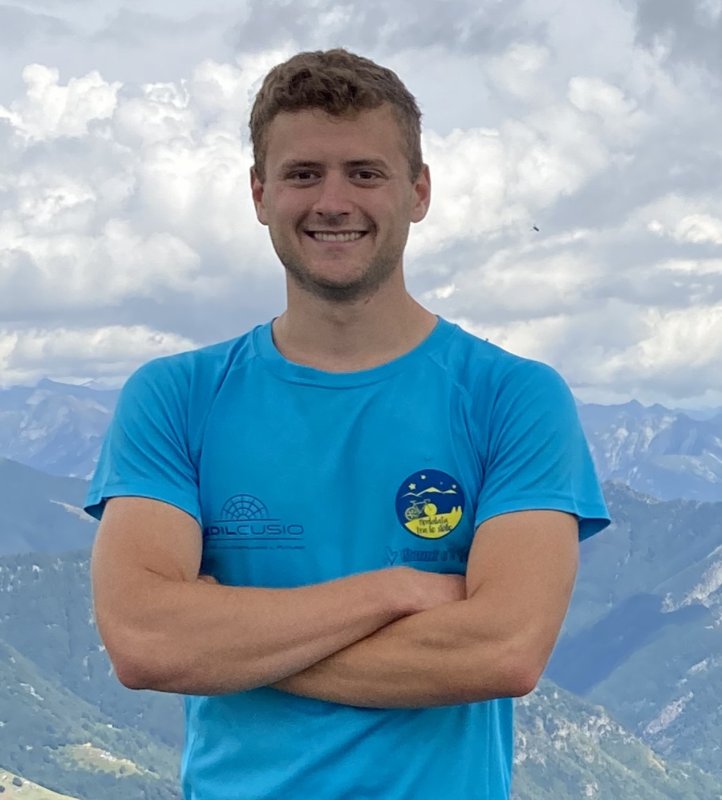
Nicolò Varallo, PhD
Post-doctoral Researcher · Fluid dynamics & mass transfer
Experimental and numerical research on gas–liquid fluid dynamics and mass transfer. Bridges the bubble-scale and large-scale activities and supports the doctoral students across the AURIGA work packages.

Stefano Puricelli, PhD
Post-doctoral Researcher · Environmental impact assessment
Environmental engineer with a European Joint Doctorate (Politecnico di Milano, 2021) and research stays at Vrije Universiteit Brussel and the Helmholtz Centre for Environmental Research. Life Cycle Assessment specialist with 20 Scopus-indexed publications. Since July 2026 he assesses the environmental impact of the CO₂ capture technology in AURIGA.
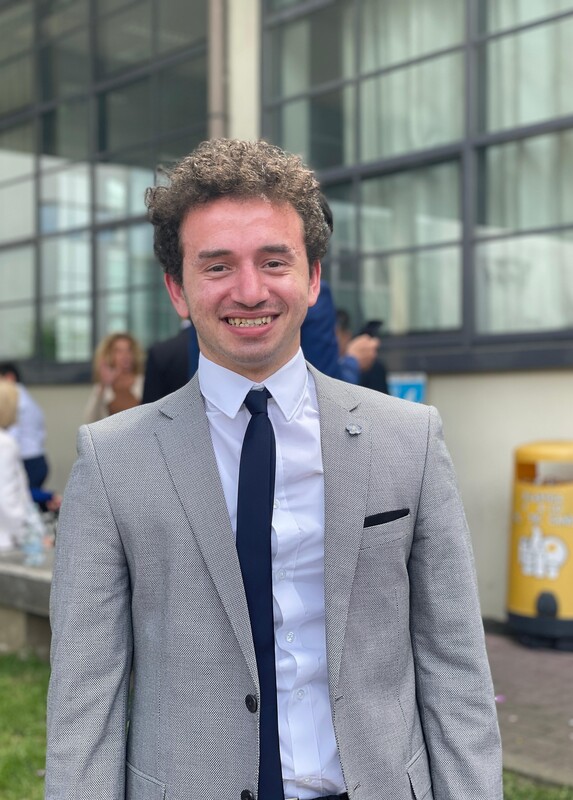
Khaled Sayed Gad, PhD
Post-doctoral Researcher · Energy systems modelling
Models long-term decarbonisation pathways and sector-coupling strategies, connecting AURIGA’s bubble-column research to system-level energy transition planning.

Andrea Ferrario
PhD Student · Coalescence
Quantifies bubble coalescence phenomena at the bubble-scale, using adjacent capillaries and image analysis.
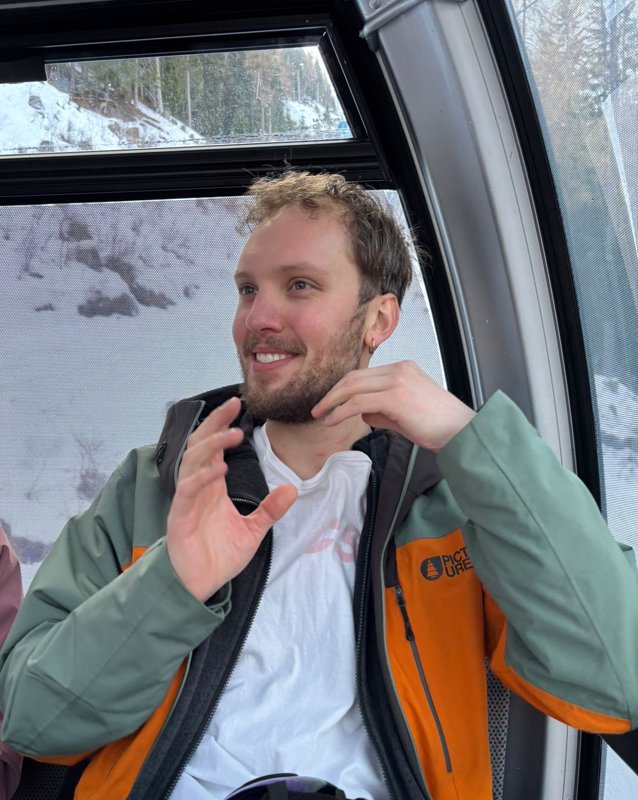
Alberto Arici
PhD Student · Mass transfer & scaling-up
Studies mass transfer in CO₂–ionic-liquid systems and the scaling-up of laboratory results towards industrial reactors.

Djamel Eddine Aissaoui
PhD Student · Bubble-scale
Studies bubble columns across scales, from single-bubble dynamics to swarm and column-scale behaviour, to connect local fluid dynamics with reactor performance for CO₂ capture.
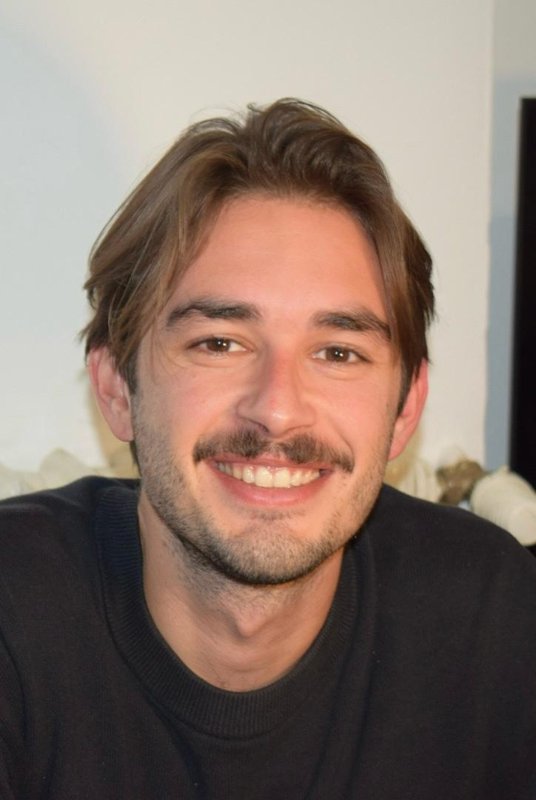
Vitor Augusto Regert dos Santos
PhD Student · Theoretical research
Develops the flow regime theory: multi-scale modeling of the operating curve Ω, transition criteria for the flow regime transitions and the variable drift-flux formulation.

Tianrou Zhang
Research Fellow · Ionic-liquid hydrodynamics
Investigates gas–liquid hydrodynamics in ionic liquid bubble columns, with particular interest in multiscale flow behaviour.
Alumni
Former team members
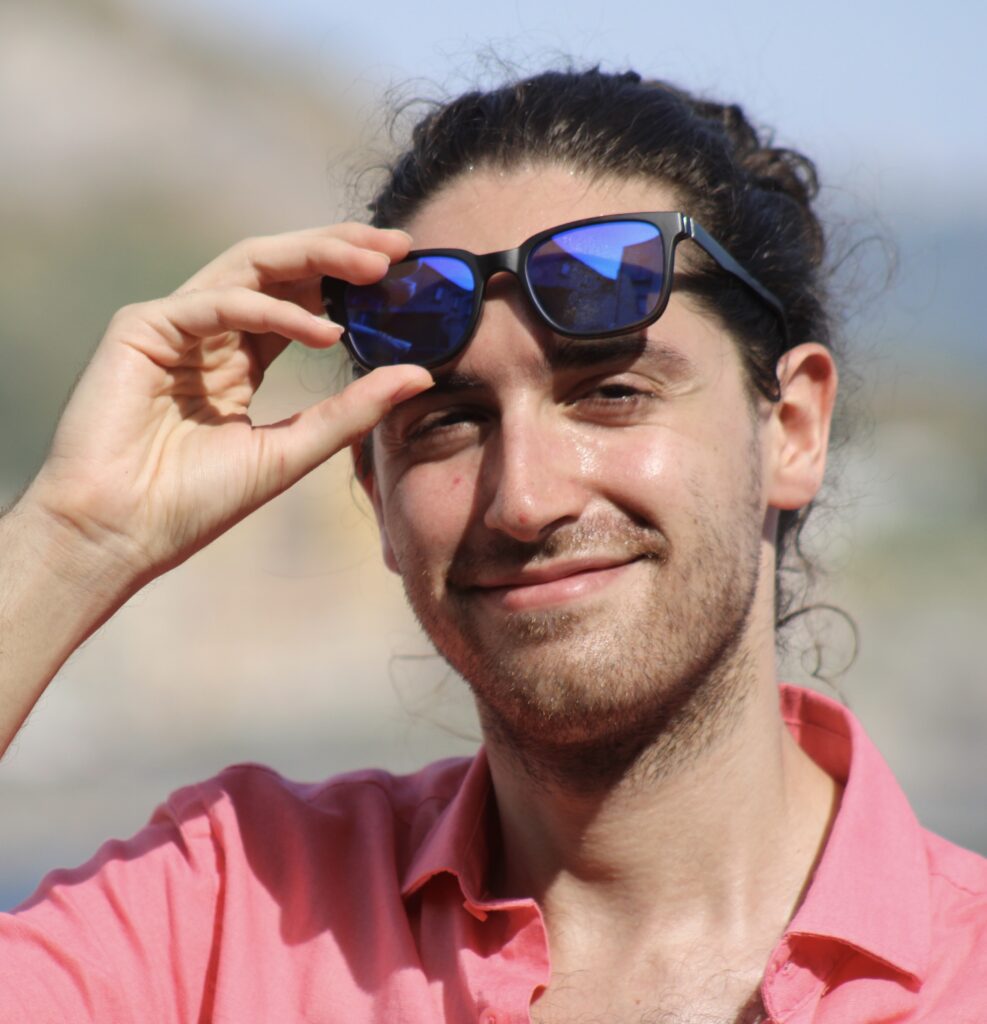
Francesco Pierini
Former PhD Student · Large-scale
Designed and operated the large-scale bubble column: gas holdup, gas disengagement, optical probe and wire-mesh measurements.
Collaborators
External collaborators
Germany
Helmholtz-Zentrum Dresden – Rossendorf
Institute of Fluid Dynamics, Dresden
- Dr. Dirk Lucas
- Dr. Tian Ma
- Dr. Hendrik Hessenkemper
- Dr. Benjamin Krull
- Dr. Fabian Schlegel
- Dr. Richard Meller
- Lantian Wang
France
IFP Énergies Nouvelles
Solaize
- Dr. Frédéric Augier
- Dr. Mohsen Shiea
- Alexis Tourbier
- Soufiane Abideddine
Germany
Hamburg University of Technology
Institute of Multiphase Flows, Hamburg
- Prof. Michael Schlüter
- Dr. Felix Kexel
Germany
Hamburg University of Technology
Institute of Process Imaging, Hamburg
- Prof. Alexander Penn
- Hannah Rennebaum
Japan
Okinawa Institute of Science and Technology Graduate University
Complex Fluids and Flows Unit, Okinawa
- Prof. Marco Edoardo Rosti
Students
Master’s thesis and internship students
Current students
Master’s thesis
Lorenzo Bellocchio
Methodological approaches to solve the multifunctionality in Life Cycle Assessments of CO₂ capture from industrial sources
Master’s thesis
Aurora Pessina
Influence of liquid viscosity and surface tension on bubble induced turbulence
Master’s thesis
Giulio Farinella
CFD modelling of two-phase bubble columns
Internship
Rachel Bracq
Experimental investigation of sparger design and solvent properties on the gas holdup of bubble column reactors
Past students
Master’s thesis
Xiangrong Gao
Image analysis on bubble columns with machine learning algorithm and 3D reconstruction of bubble
Internship
Mathilde Favier
Training and testing of an image analysis segmentation algorithm applied to bubble column experimental data