The small-scale experimental facilities of the project have been designed, built and commissioned — closing tasks C.1 and C.2 and opening the measurement campaigns of the bubble-scale work package.
The bubble-scale rig is a rectangular-section bubble column operated at ambient conditions, with liquid recirculation to renew the liquid depleted by CO₂ absorption. Its purpose is to isolate the elementary mechanisms that the large-diameter column can only see in aggregate: how a single bubble rises and deforms, how two bubbles coalesce, and how much CO₂ crosses the interface while they do so.
Three measurement configurations
Individual bubbles of a controlled size, for the study of rise velocity, trajectory and shape. Adjacent capillaries bring two bubbles into contact on a repeatable path, which is what makes a coalescence rate measurable rather than merely observable. A dense-swarm configuration gives the collective behaviour — bubble size, shape and velocity statistics — through automated bubble tracking.
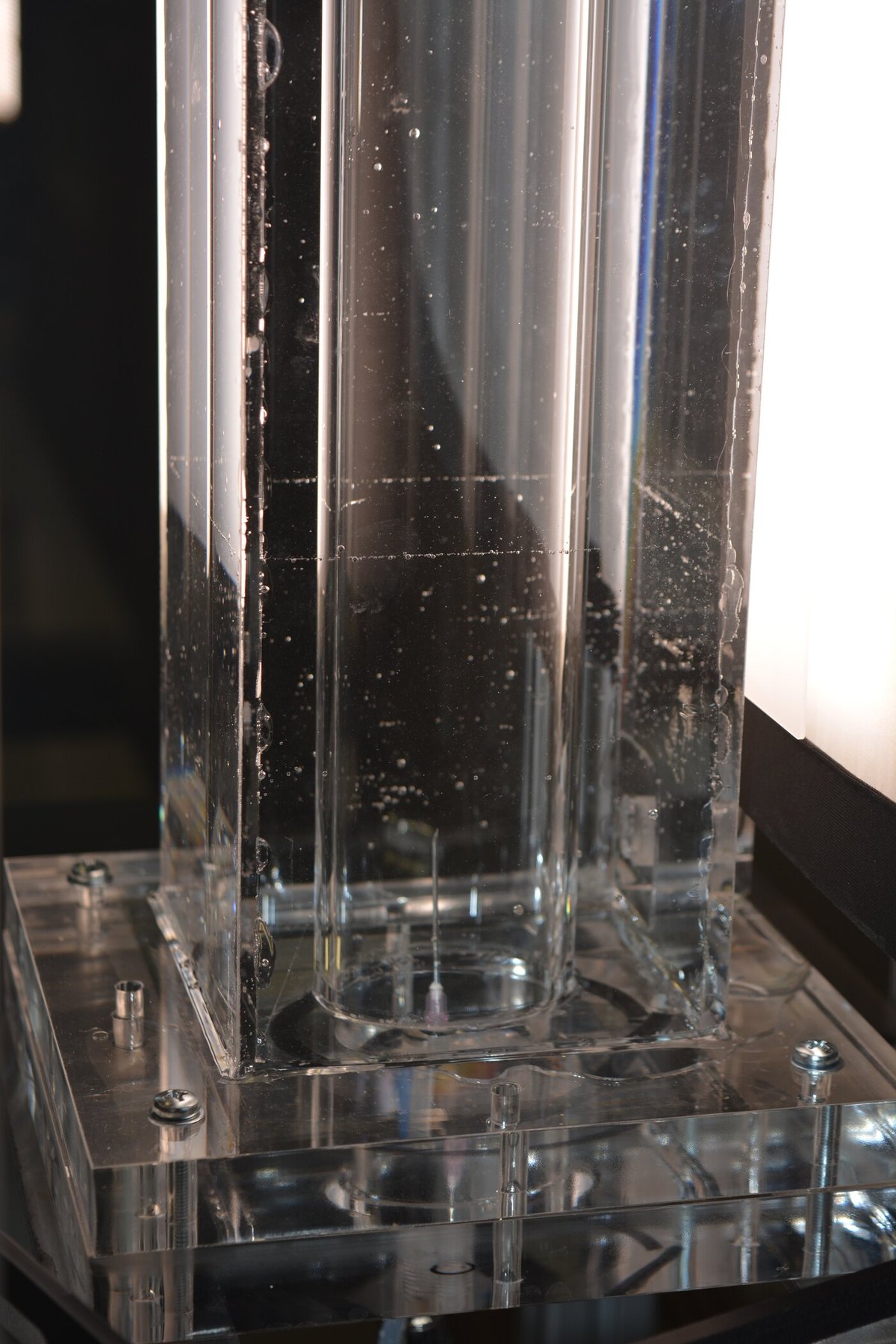
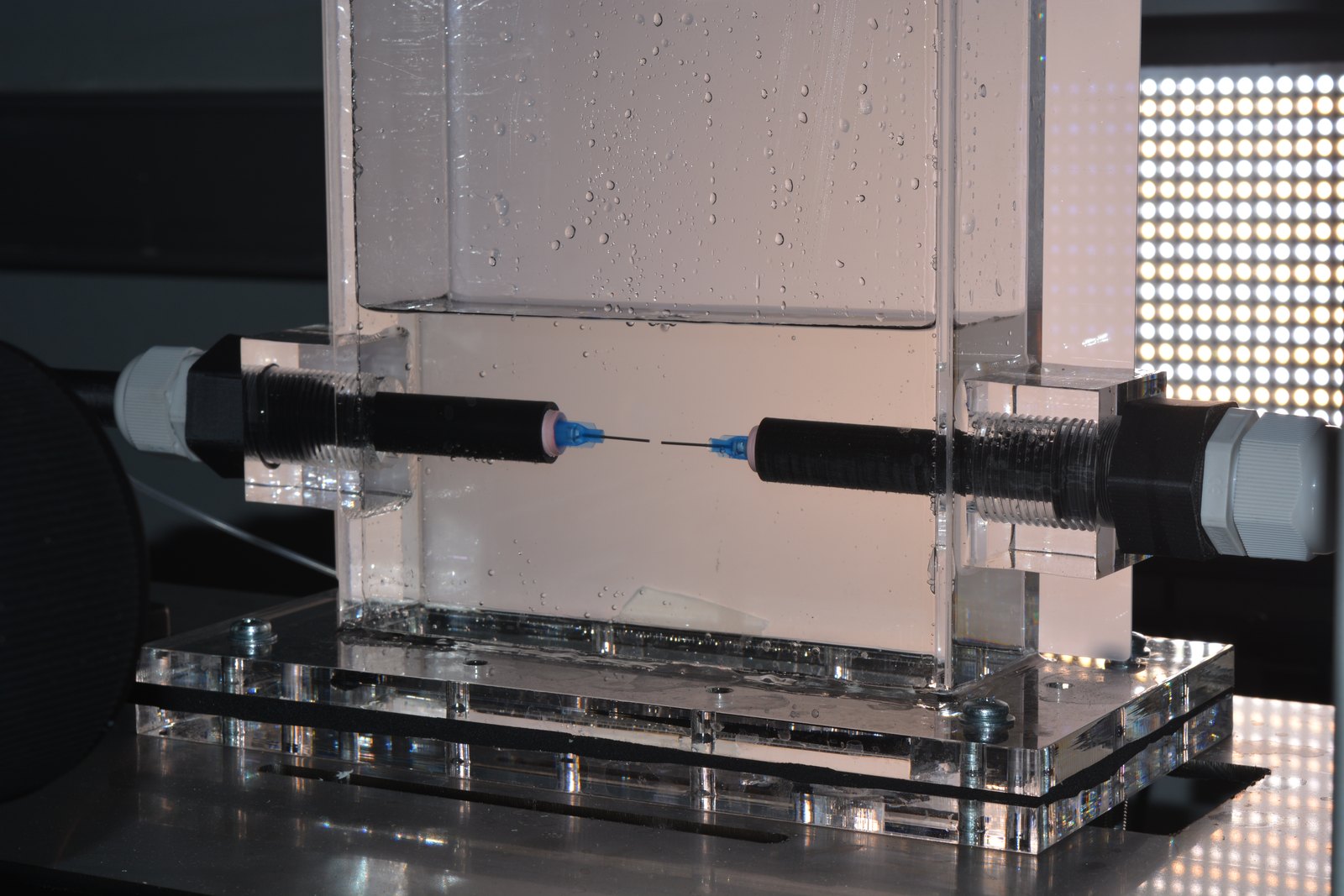
The optical chain is common to all three: back-lit high-speed imaging and Particle Shadow Velocimetry, following the approach of Hessenkemper and co-workers, which resolves the liquid velocity field around each bubble as well as the bubble itself. The data these configurations produce are what tasks A.4 and A.5 need in order to model the instabilities behind the flow regime transitions and to reformulate the drift-flux model.